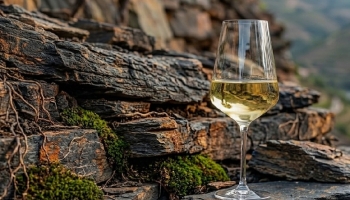
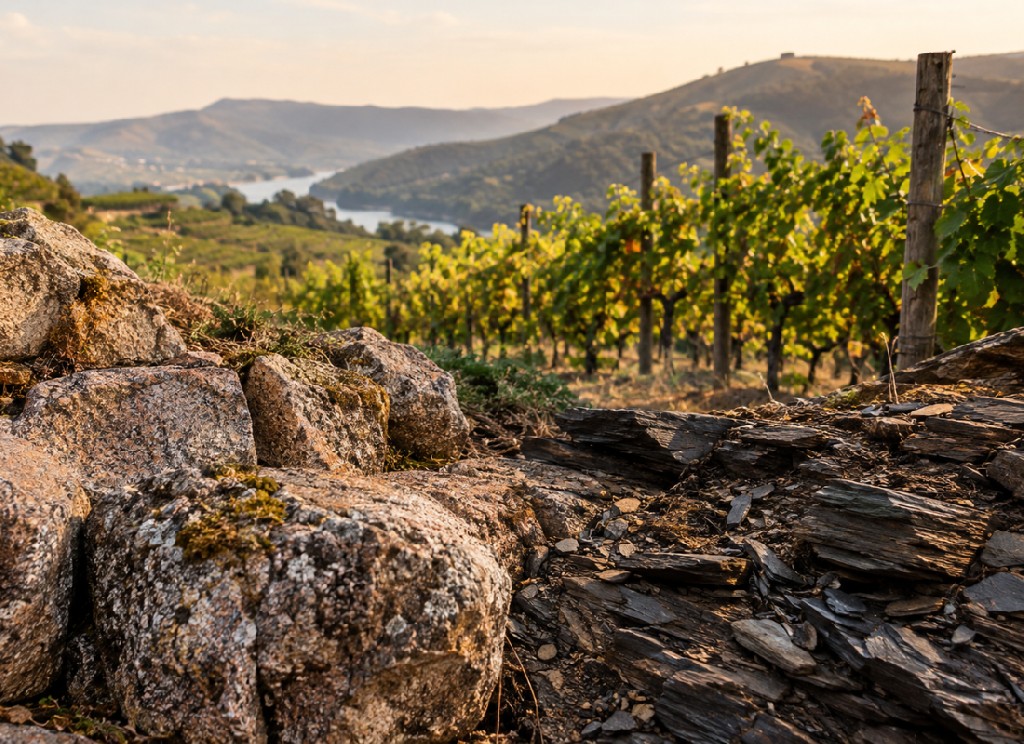
Portugal is a country of remarkable geological diversity, and this richness is reflected in the character of its wines. From granite to schist, limestone and sandy soils, each soil type provides different growing conditions, influencing water availability, grape ripening and the overall profile of the wine.
In Minho and the Vinho Verde region, granite soils are often associated with fresh wines, lively acidity and delicate aromas. In the Douro, schist plays a defining role in the landscape and the identity of its wines. Combined with the region’s hot, dry climate, it contributes to wines with concentration, structure and remarkable depth.
In other regions, limestone soils, such as those found in Bairrada and parts of the Lisboa region, can favour elegant, balanced wines. In the Alentejo, the diversity of soils, including granite, schist and clay formations, contributes to a variety of wine styles, from fruity and full-bodied to richly structured.
Of course, soil does not act alone. Climate, altitude, grape varieties and the winemaker’s choices are equally important in shaping the final result. It is the interaction of all these elements that defines each region and creates the diversity that sets Portuguese wines apart.
From granite to schist, every soil tells part of a bottle’s story. Exploring Portuguese wines through their origins is also a journey through the country’s landscapes, traditions and truly distinctive winemaking heritage.